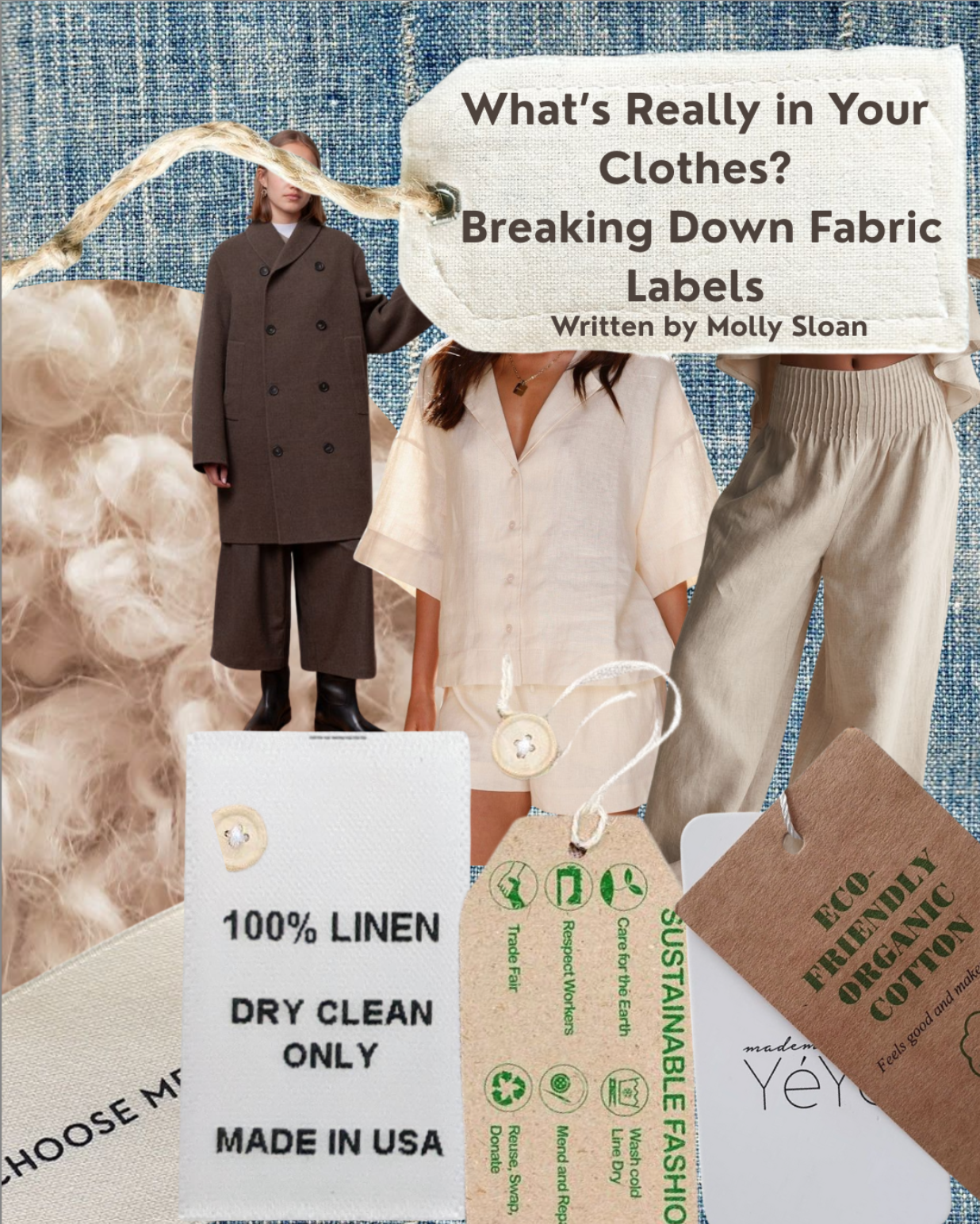
What’s Really in Your Clothes?
Breaking Down Fabric Labels
01/26/2026
Written by Molly Sloan
Why fabric labels matter
You’ve probably checked a clothing tag before, only to walk away more confused than informed. Between “100% polyester,” “eco-friendly materials” and fabric blends that sound more like a chemistry experiment than a sweater, clothing labels aren’t always easy to understand. Those tiny tags not only tell us how we should cautiously wash an item, but inform us on how our clothes are made, how long they’ll last and the impact they have on us and our planet. Understanding what’s in your clothes doesn’t mean shopping perfectly; it just means shopping with intention.
This guide breaks down labels, materials and confounding terms consumers overlook.
So that the next time you’re browsing the racks, you’re doing so intentionally.
Buzzwords & Greenwashing to Watch Out For
“Eco-friendly” – vague and unregulated.
“Sustainable materials” – ask: which ones and why?
“Recycled” – recycled from what? Pre or post-consumer?
“Natural” – doesn’t always mean low impact.
The Basics: What a Clothing Label Tells You
Clothing labels aren’t without reason; they’re a universal system designed to help consumers care for their clothes properly. Known as textile symbols, these small icons communicate important information like how to wash, dry, bleach or iron a garment. Most labels also include fibre content, which is one of the biggest clues to a piece’s sustainability and longevity, along with care instructions that affect how long it will last. A country of origin will often be listed, offering insight into production standards.
Common Fabrics: What They Actually Mean
Natural Fibres: Natural fibres come from plants, animals or minerals and are often praised for being breathable and biodegradable. Examples of natural fibres are cotton, organic cotton and wool.
Cotton: While it's soft, conventional cotton is water-intensive, relying heavily on pesticides.
Organic Cotton: A more sustainable option.
Wool: Renowned for durability and temperature-regulating properties. It is biodegradable and lasts for years. This material is also known for being less prone to skin irritation.
Synthetic Fibres: Polyester, nylon and acrylic are made from fossil fuels and dominate the fast fashion industry because they’re cheap, versatile and easy to mass produce. The downside is that these materials don’t biodegrade and release microplastics every time they’re washed, contributing to long term environmental pollution. Their low cost and durability are exactly why fast fashion brands rely on them.
Fabric Blends: Why “A Little Bit of Everything” Isn’t Always Better
For good reason, fabric blends are everywhere. Fibres can make clothing more affordable, stretchy, wrinkle-resistant and durable. It’s often that cotton is blended with polyester or a touch of elastane. However, blends come with an environmental trade-off. Because multiple fibres are tightly woven together, blended fabrics are at times difficult to recycle. Ultimately ending up in landfills. This doesn’t mean blends are always bad; they actually make sense. A small percentage of elastane, for example, can help garments keep their shape longer, improving fit and extending wear time.
The key is moderation: fewer fibres, simpler blends and clothing you’ll wear often tend to be the more sustainable choice.
How to Use Labels When Shopping
Start simple: Look for fewer fibres: Single fibre garments are often easier to care for and more recyclable.
Next: Prioritize durability over trendiness: Well-made basics you’ll wear repeatedly usually have a lower impact than the statement piece worn once or twice.
Finally: Ask yourself one honest question: “Will I actually wear this enough to justify buying it?” Sustainable fashion isn’t about perfection; it’s about making better choices when you can.
Knowledge Is Power:
Clothing labels won’t tell you everything about a piece of clothing, but they are a powerful place to start. Understanding what’s on those tiny tags helps you make more informed, intentional choices without falling into guilt. You don’t need to shop perfectly to shop consciously.
Next time you’re browsing, take one moment to check a label. That small act of curiosity can make a bigger difference than you think.
References
Audaces. (2023, February 9). Know the textile symbols and the meanings of the clothing labels. Audaces.com. https://audaces.com/en/blog/textile-symbols
Desmond, C. (2025, February 26). How Clothing Labels Reveal the Story Behind Your Clothes. Simpleconsign.com; Emporia Holdings, Inc. https://www.simpleconsign.com/blog/clothing-labels
Little. (2024, September 13). Little Black Look. Little Black Look. https://www.littleblacklook.co.uk/blog/natural-vs-synthetic
Natural Fabrics: The Ultimate Guide to Eco-Friendly Textiles. (2025). Nomad the Label US. https://nomadthelabel.com/blogs/blog/natural-fabrics-ultimate-guide-to-eco-friendly-textiles